
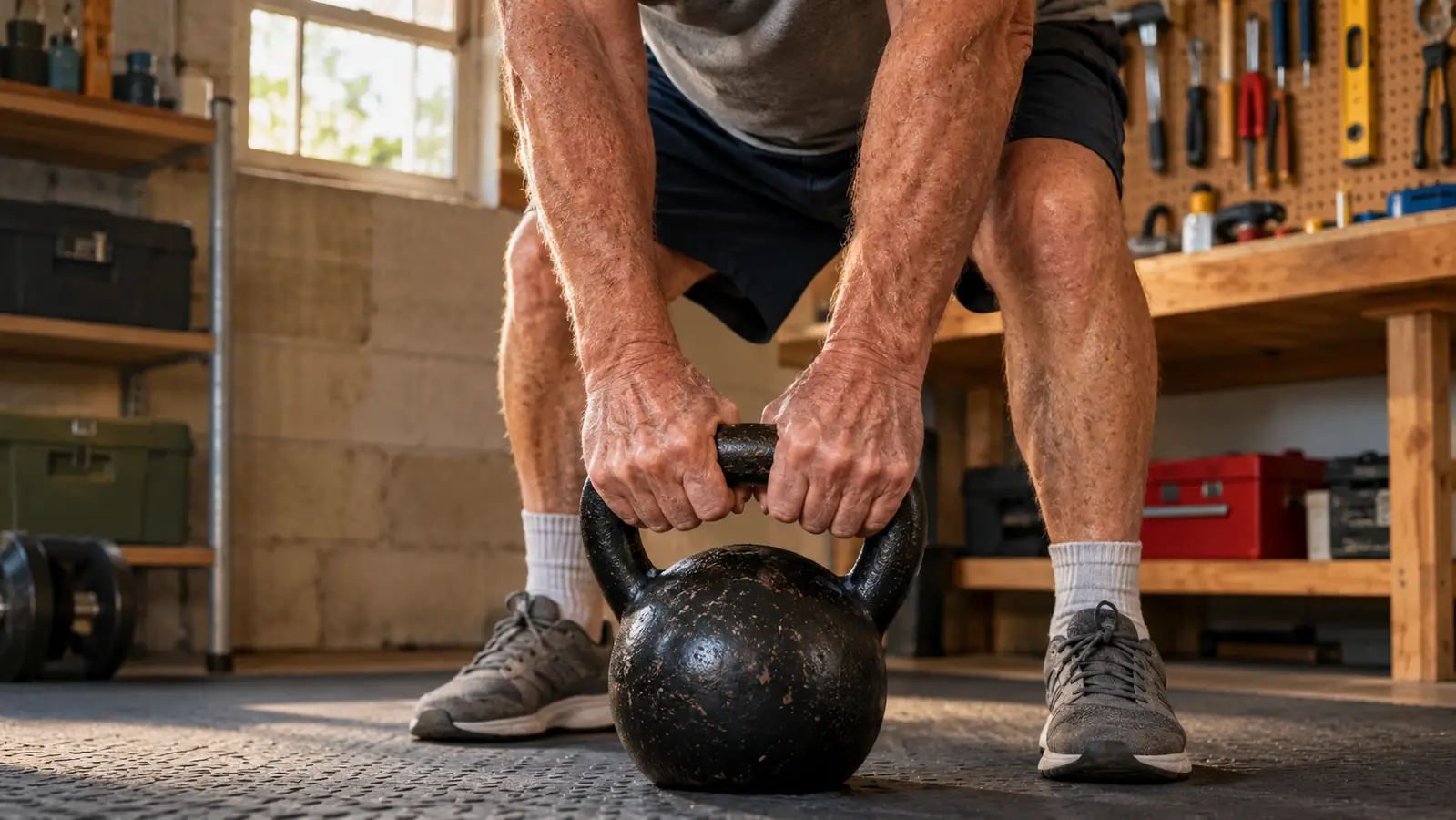
The moment I knew I had to change something came on a Saturday in the spring of my sixty-first year. I was trying to lift a bag of mulch out of the trunk of the car and had to stop and brace myself against the bumper. Later that day, I got down on the floor to play with the grandkids and could not get back up without holding on to the couch. Carol did not say anything. She did not have to.
I spent thirty years teaching shop, so I know a thing or two about tools and about what happens to a body that stands on concrete floors. My left knee has been stiff for a decade, and my right shoulder complains every time I reach overhead. I am not the guy who lifts weights. I am the guy who fixes the railing so the guy who lifts weights does not fall down the stairs. But I knew the fix for a weak body is usually a stronger one, and the search for something I could do at home ended with a Yes4All vinyl kettlebell.
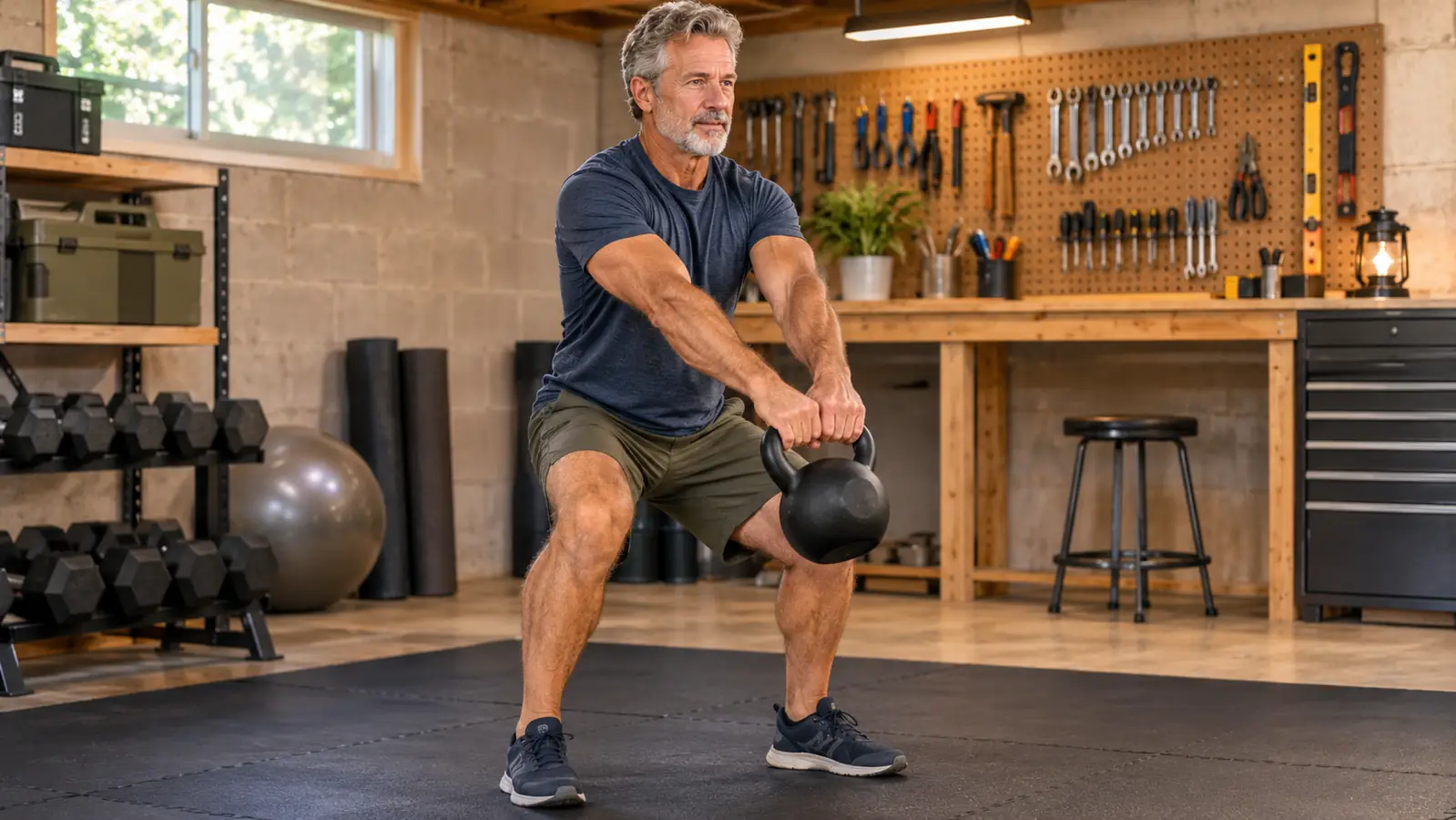
The ten-pound size felt like a small, sensible step, and that is exactly what I needed. I did not want a program or a plan. I wanted one piece of equipment I could pick up in the basement, three or four mornings a week, without a gym membership or a trainer, without driving anywhere or waiting for a machine. No classes, no chalk, no playlist. Just me, the rubber mat, and a weight I could actually handle.
This is the story of picking up that kettlebell for the first time at sixty-three, what I did right, what I did wrong, and what I would tell anyone my age who is thinking about doing the same. I am not a doctor and this is not medical advice. Check with yours before you start any new program. I just want to tell you how it went for me.
The first morning I swung that ten-pound Yes4All kettlebell, I knew I had found the one piece of equipment I would actually keep using.
A ten-pound start is still a start.
The Yes4All vinyl kettlebell is the piece of gear I reach for three or four mornings a week. Solid cast iron, a wide smooth handle, and a vinyl finish that is easy to clean and easy on the basement floor. Check today's price on Amazon and see if it fits your corner of the basement.
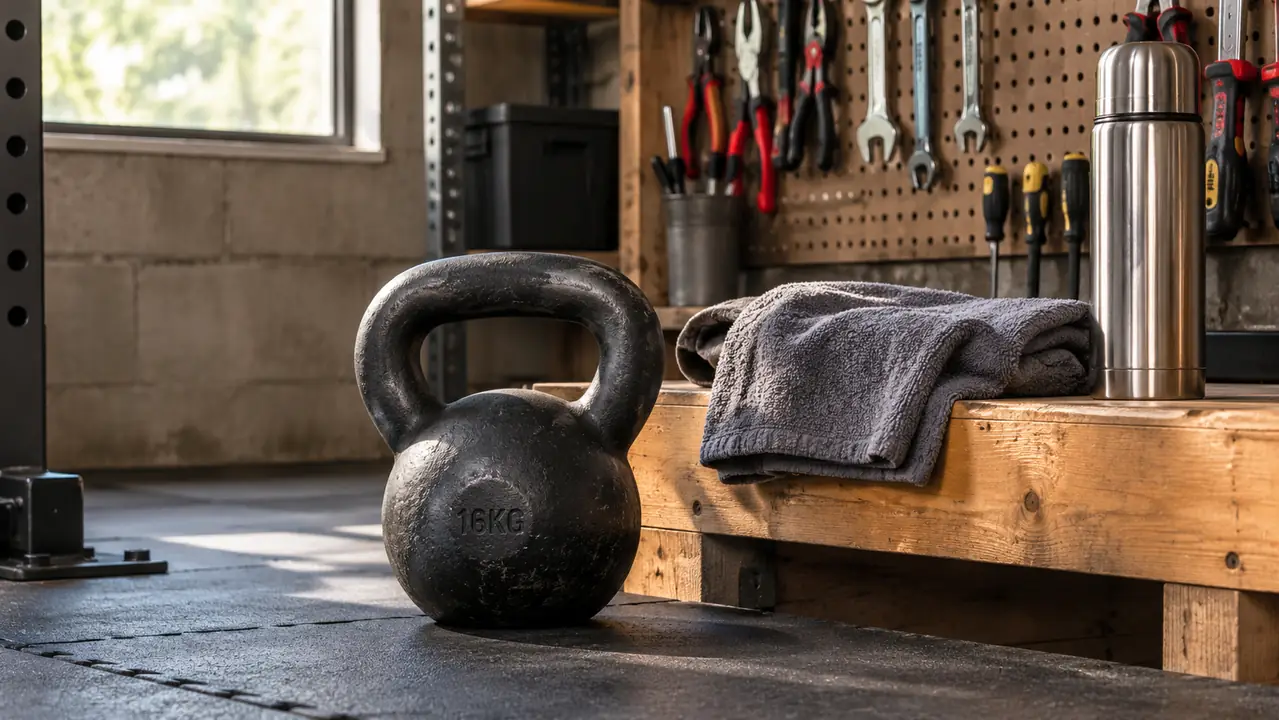
Amazon Check Today's Price on Amazon →The kettlebell arrived in a sturdy box, and the first thing I noticed was how solid it felt. The listing said cast iron with a vinyl finish, no welds or seams, and holding it in my hands, I believed it. It sat on the rubber mat in the corner of the basement next to my workbench, and for two days I walked past it before I picked it up. That gave me time to read the little card that came with it, which mentioned a one-year warranty and a thirty-day return, and to remind myself that the only goal for week one was to pick the thing up.
When I finally did pick it up, I was surprised by two things. The first was how natural the wide, smooth handle felt in my hand. The second was how heavy ten pounds felt after about thirty seconds of holding it away from my body. I put it down, caught my breath, and laughed at myself. That was the moment I knew this was going to be a real project, not a phase.
The first week, I did nothing fancy. I held the kettlebell in both hands and did slow deadlifts, just hinging at the hips and standing up. I watched a few videos on my phone, but I kept the weight low and the reps low. Ten pounds sounds like nothing until you have done fifteen slow reps with a stiff knee and a grumpy shoulder. Then it sounds like exactly enough. I wrote the date on the calendar the first morning I finished a full set without stopping.
By the second week, I worked up to a basic two-hand swing. The wide handle made it easy to hold, and the vinyl finish meant I did not have to worry about it scratching the floor or rusting in the damp corner of the basement. I started with ten swings, then fifteen, then twenty. Some mornings I only did five swings and called it a win. Showing up mattered more than the number, and I showed up three or four mornings a week, which is more than I ever did at a gym.
Carol tried it one Saturday morning. She is in her sixties too, and she has never been interested in my tools or my projects, but she picked up that kettlebell, did a few deadlifts, and said it felt better than the dusty dumbbells we have in the closet. She has used it a couple of times a week since. I still have a stiff knee, and my shoulder still complains if I try to press overhead, so I do not press overhead. I swing, I deadlift, I carry it around the basement. I checked with my doctor before I started, and I would tell anyone my age to do the same. This is not a cure for anything. It is just a solid tool that makes it easier to do the work.
What I'd Tell You If We Were Sitting at My Kitchen Table
If you are in your sixties and thinking about picking up a kettlebell for the first time, here is what I would say over coffee. Start lighter than you think you need. Ten pounds is a fine place to begin. Learn the movement before you add weight, and do not let anyone shame you into going heavier. Keep it somewhere you will see it every day, because the best equipment is the equipment you actually use. And if you have any health concerns, talk to your doctor first. The Yes4All kettlebell is a good, honest tool, and it has earned its spot next to my workbench. But the tool only works if you pick it up.
Your first rep is the hardest one.
I started with a ten-pound Yes4All kettlebell in a corner of my basement. You can start wherever you are, as long as you start. Check today's price on Amazon and see if it belongs in your corner.
Amazon Check Today's Price on Amazon →