I turned 61 and found myself on the basement floor after a game with the grandkids, and getting back up took longer than the game itself. That was the moment I admitted my knees and shoulders needed more than a walk around the block. I started lifting at home about five years ago, and the WHATAFIT resistance bands are the reason I kept going when free weights made my stiff left knee and grumpy right shoulder complain.
Here are the ten reasons I reach for these bands on a Tuesday morning when my joints are talking back. None of this is medical advice, so check with your doctor before you start any new program, especially if you have a knee or shoulder that has been with you for decades.
Start with the Joint-Friendly Way to Lift at Home
Five color-coded tubes, cushioned handles, and a door anchor in one carry bag. See today's price on Amazon.
Amazon Check Today's Price on Amazon →The Band Does the Slowing Down, Not Your Joints
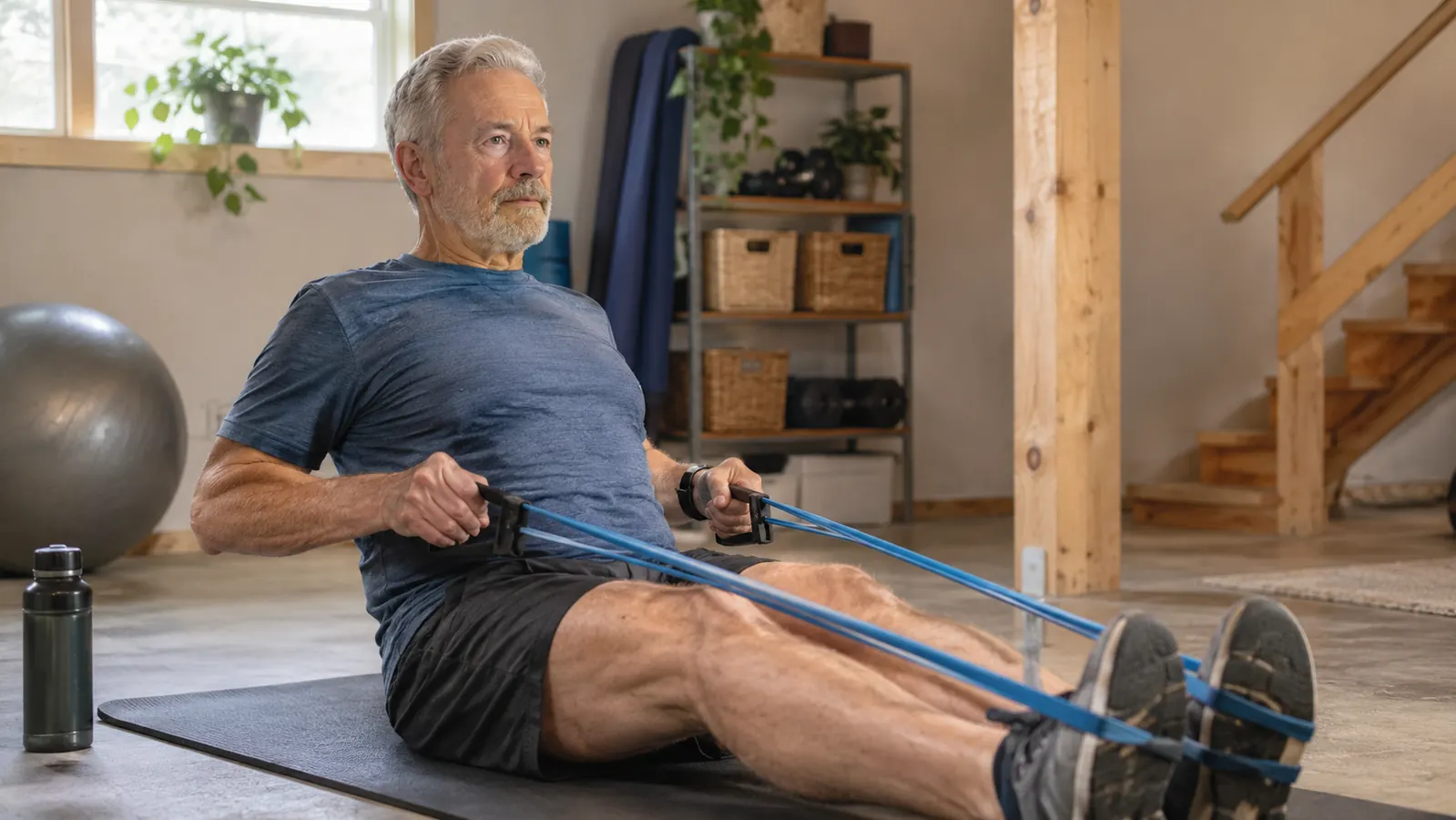
With a dumbbell, the weight decides how fast the movement happens. Drop your elbow and the weight follows, and a sore shoulder has to catch it. With a resistance band, the tube stretches, so the load builds gradually as you move. I remember the first Tuesday morning I tried a seated row with the lightest tube, the 10 lb one. My right shoulder, the one that complains overhead, never once felt like it had to brace for a sudden pull. That slow build is easier on a knee that has spent decades on concrete shop floors, because nothing ever yanks it out of place. The band does the slowing down, which means my joints do not have to. That one idea, gradual load instead of sudden load, is why I stuck with bands when the dumbbells went back in the closet. And at 66, I will take any advantage my joints will give me.
You Control the Tension at Every Inch
A dumbbell is heaviest at the bottom of a curl, right where a stiff left knee or a grumpy shoulder feels it most. A band is lightest at the start and heaviest at the top, so you can stop short of the painful range and still get a solid workout. I tested this the way I test most things, by doing it wrong first. In my second week I pushed a curl all the way up with the 20 lb tube, and my shoulder let me know about it for two days. The next Tuesday I shortened the movement by about four inches, stopped where the band felt firm but not angry, and finished the whole session without a single twinge. That is the whole argument for bands right there. You are never trapped at the bottom of a lift, because the band is always willing to meet you where your joints are.
Five Resistance Levels Mean You Start Small
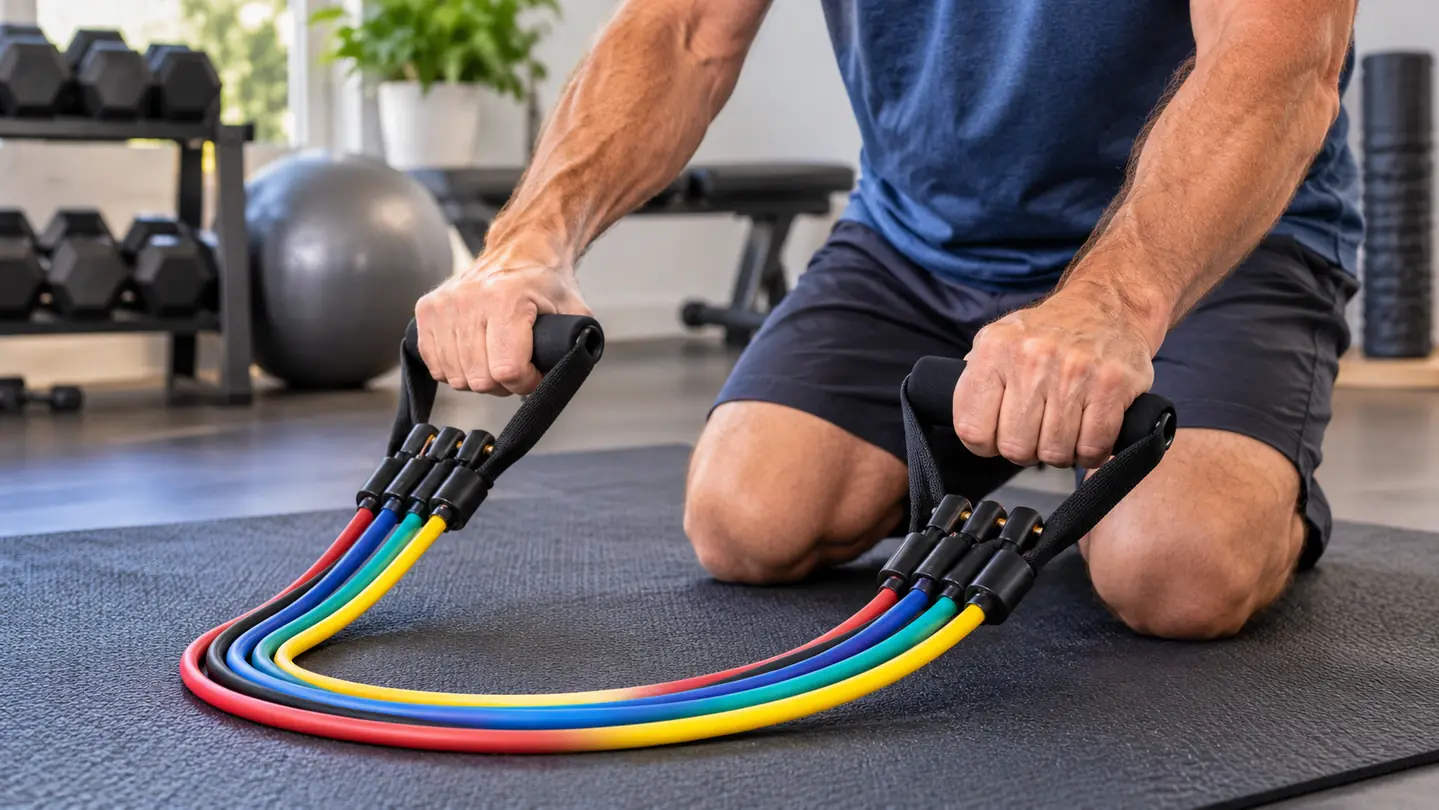
The WHATAFIT set includes five color-coded tubes rated at 10, 20, 30, 40 and 50 lb. I started with the lightest tube and stayed there for weeks. You can use the tubes alone or stack them together, which is a fancy way of saying you decide how hard today is.
Cushioned Handles Spare Your Grip and Your Wrists
The handles have cushioned grips that support rows, presses and curls without digging into your palms. For a retired shop teacher with hands that have done a lifetime of work, that padding is the difference between a good session and a sore one.
The Door Anchor Opens Up Gentle Rows and Presses
You do not need a bench, a rack or a gym membership. The door anchor lets you attach the bands to a closed door and do seated rows and chest presses from a chair. My setup is a folding chair on the rubber mat next to the workbench, with the anchor hooked over the top of the basement door. On a cold January morning, that is the whole gym. I do three sets of twelve rows, rest about a minute between sets, and my back stays supported the entire time. Keeping my joints in a comfortable line matters more now than it did at fifty, and the door anchor makes that line easy to find. Carol sometimes pulls up a second chair and does her own set while I finish mine, which is more company than I ever got at a gym. No commute, no waiting for a machine, no one watching me fumble with the anchor.

Ankle Straps Turn the Set Into Leg Work Without Impact
The two ankle straps add kickbacks and leg work, which matters when lunges and jumps are off the table. I use the straps for slow leg extensions while holding the back of a chair, and my stiff left knee handles it far better than squats ever did.
The Carry Bag Means You Train Wherever You Are
The whole set, five tubes, two handles, two ankle straps, one door anchor and the carry bag, weighs about 2 pounds. I have taken it to a friend's porch and used it in a hotel room. When the equipment is light, the excuses get light too.
You Can Stop Mid-Movement Without a Weight Crashing
If a joint twinges halfway through a rep, you just ease off and the band slackens. There is no dumbbell to set down carefully and no bar to rerack. I train alone in a corner of the basement, three or four mornings a week, and Carol is upstairs with her coffee, not spotting me. That means I need equipment that forgives a bad day. One morning last spring my knee barked halfway through a leg extension, and I simply let the band go slack, stood up, stretched for a minute, and came back to finish with a lighter tube. With a stack of iron, that moment would have meant wrestling a weight back onto a rack. With a band, it meant nothing at all. That kind of forgiveness is exactly what a 66-year-old body needs at 6:30 in the morning.
The 2-Year Warranty Covers the What-Ifs
WHATAFIT backs the set with a 2 Year Limited Warranty. After plenty of use, mine still look and stretch the way they did when they arrived. Knowing a company stands behind the product makes it easier to hand over my money in the first place.
Daily Stretching and Strength in One Simple Tool
The recommended use is daily stretching and workouts, and that matches how I actually live. On stiff mornings, I do ten slow minutes with the lightest tube, mostly just letting the band guide my arms through easy circles and gentle pulls. On stronger days, I stack two tubes for rows and presses, and the stackable design means I am not buying a second set of equipment. One set covers both ends of my week, which matters in a house where the basement corner is already spoken for by the workbench. When the routine is this simple, I actually keep it up, and keeping it up is what has made the difference for my knee.
What I'd Skip
I would skip the heaviest tube on days when my shoulder acts up. The 50 lb tube has its place, but it is not the place to prove anything. I learned that on a March morning when I stacked the 40 and 50 lb tubes for a row, felt a sharp pinch in my right shoulder, and spent the rest of the week reaching for the coffee pot with my left hand. I would also skip using the door anchor on a hollow-core door, use a solid door or anchor the band around a sturdy post instead. And if you are looking for a way to load a barbell for heavy squats, this is not that tool. These bands are for steady, joint-friendly strength work at home, not for chasing a new personal record.
The WHATAFIT bands still stretch the way they did when they arrived, and my stiff left knee has not missed a single Tuesday session.
Give Your Joints the Gentle Start They Deserve
The WHATAFIT resistance bands set includes five tubes, two cushioned handles, two ankle straps, one door anchor and a carry bag. See today's price on Amazon.
Amazon Check Today's Price on Amazon →