
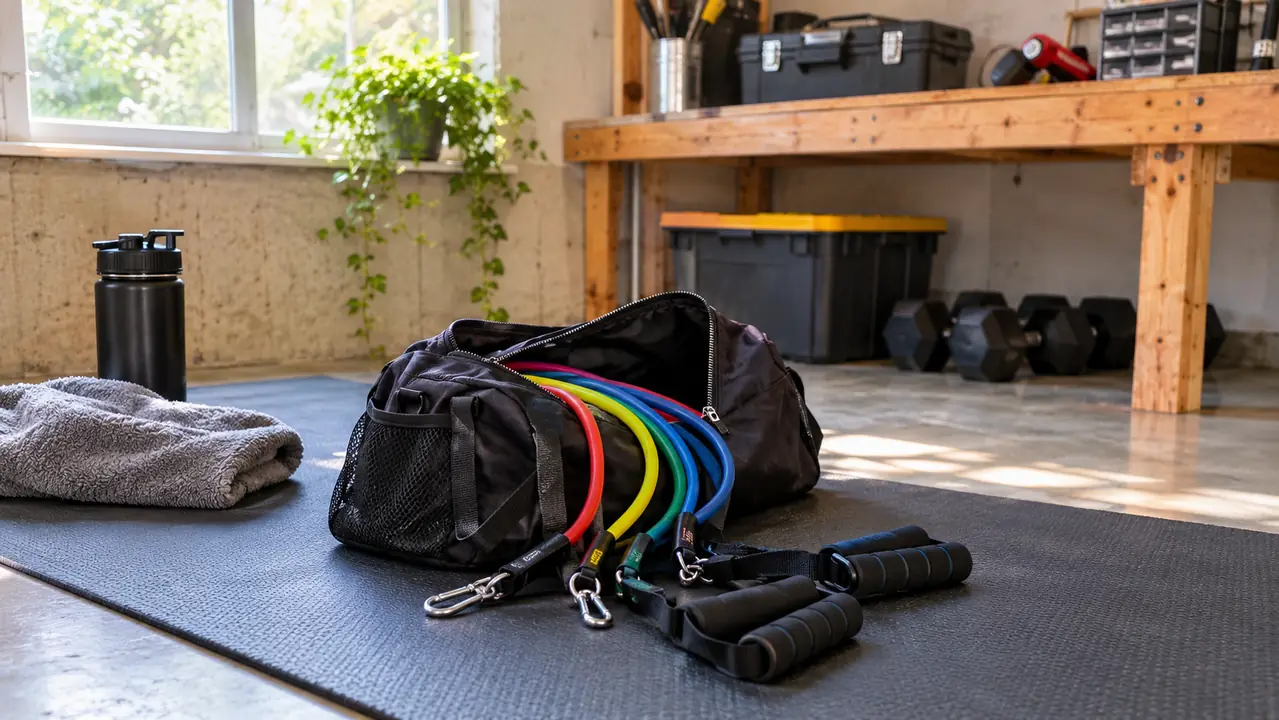
The morning I turned 61, I couldn't get up off the basement floor without using the workbench. That's not a metaphor. I'd been playing with the grandkids in the yard, went down on one knee to pick up a ball, and just stayed there for a minute, pretending to tie my shoe. The knee that gave out was my left one, the same one that's been stiff ever since, from decades of standing on concrete shop floors. A few weeks later I tried to lift a bag of mulch and my back said no in a way that got my attention. That's when I started looking into strength training at home, and it's why I eventually ended up with the WHATAFIT resistance bands set sitting in the corner of my basement, next to the workbench, on the same rubber mat where I couldn't get up that day.
I'm 66 now. I've been training in that corner three or four mornings a week for about five years. I don't have a trainer, I don't have a gym membership, and I don't have any interest in lifting weights heavy enough to make my shoulder worse. My right shoulder complains when I reach overhead, so I've learned to work around it. What I want is simple: to stay strong enough to lift the mulch bag, get up off the floor, and keep up with the grandkids. The WHATAFIT bands are the piece of equipment I keep coming back to. This is a review of them after months of daily use, written for people my age who want the same things.
The Quick Verdict
The WHATAFIT resistance bands are the best home strength option I've found for someone in their 60s who wants to train without a gym, heavy weights, or a complicated setup. Five tubes, cushioned handles, ankle straps, and a door anchor, and after months of daily use they still work exactly like they did on day one.
Amazon Check Today's Price →The five tubes that got me off the basement floor
After 61, I needed strength training I could actually stick with. The WHATAFIT resistance bands set has five color-coded tubes from 10 to 50 lb, cushioned handles, ankle straps, and a door anchor, all in a carry bag I keep by the workbench. If you're in your 60s and training at home, this is the set I'd start with.
Amazon Check Today's Price on Amazon →How I've Used It
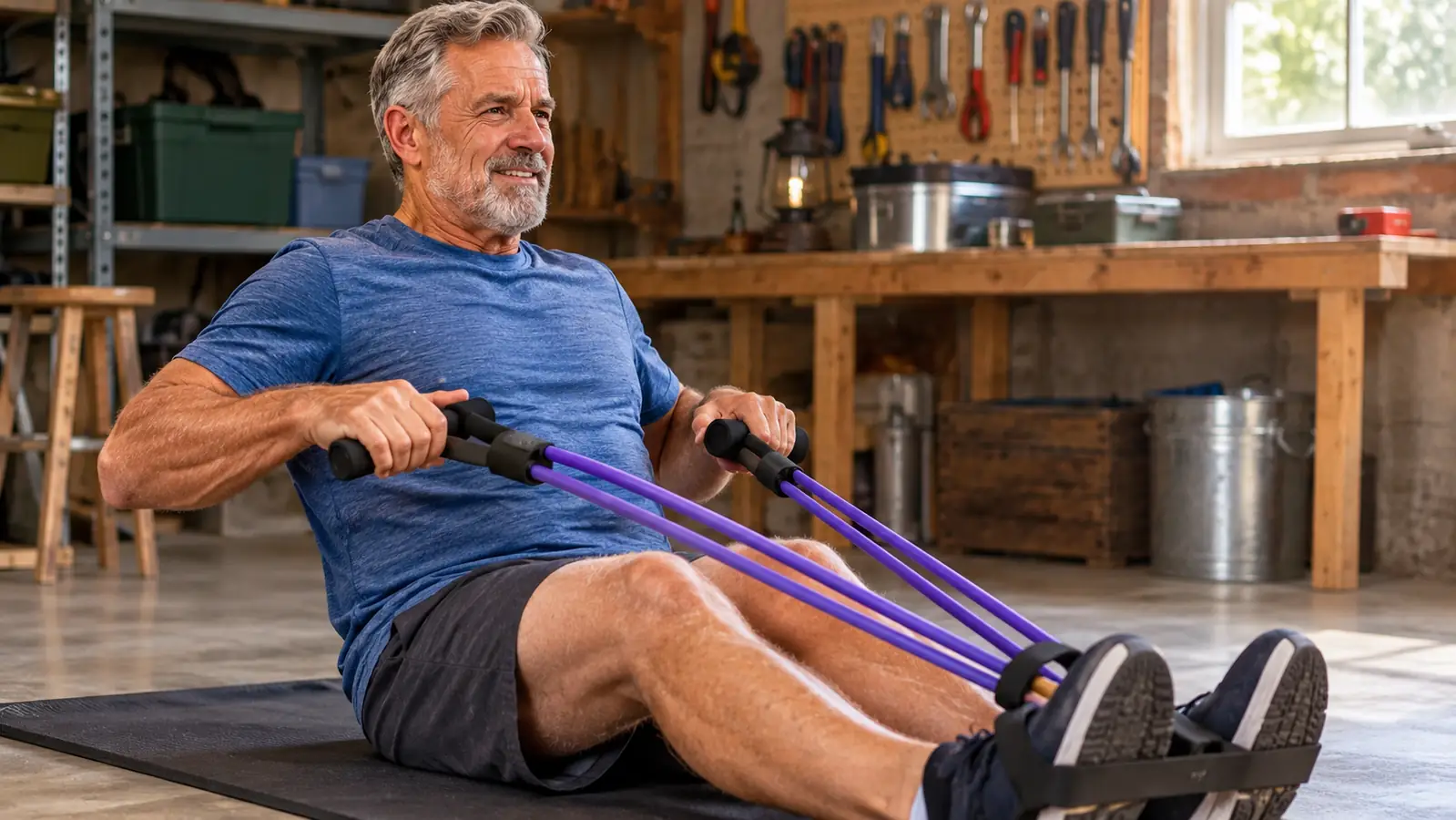
I train in a corner of my basement on a rubber mat, next to the workbench. Three or four mornings a week, usually before the coffee gets cold. I pull the WHATAFIT bag out, pick the tubes I need, and work through the same basic movements: rows, presses, curls, squats with the ankle straps, and a lot of stretching. The whole session runs about 30 minutes, and I'm usually done before Carol finishes her first cup.
Here's what I mean by daily use. I don't mean I do a full workout every single day. I mean the bands are part of my routine almost every day. Some mornings that's a full session. Other mornings it's ten minutes of stretching and a few light rows while Carol gets the news on. The bands make that easy because they take thirty seconds to set up and there's nothing to load, adjust, or wipe down afterward.
When I started, I could barely manage the lightest tube for a full set of rows. Now I can stack the 20 and 30 lb tubes together for a row that actually makes me work. That progress happened slowly, over months, and the bands never once got ahead of me. That's the whole point for someone my age. You can add resistance in small steps, which is exactly what my knee and shoulder needed.
What's in the Bag: Five Tubes and a Door Anchor
The WHATAFIT set comes with five color-coded tubes rated at 10, 20, 30, 40 and 50 lb. They can be used alone or stacked together, which is the feature I use the most. The 10 lb tube is for stretching and warm-ups. The 20 lb tube is my everyday row. When I want to push, I clip the 20 and 30 together and do a slower set with a longer pause at the end.
Each tube has a cushioned handle. I've used bands where the handles dug into my palms; these don't. The grips support rows, presses and curls without making my hands go numb, which matters when you have sixty-six-year-old hands that have spent a lifetime around shop tools.
There are also two ankle straps for leg work. I use them for kickbacks and for a standing leg exercise my physical therapist showed me. I wrap the strap around my ankle, step on the other end with my foot, and work the leg slowly. It's the closest thing I've found to the leg work I used to do at a gym, minus the drive and the waiting for a machine.
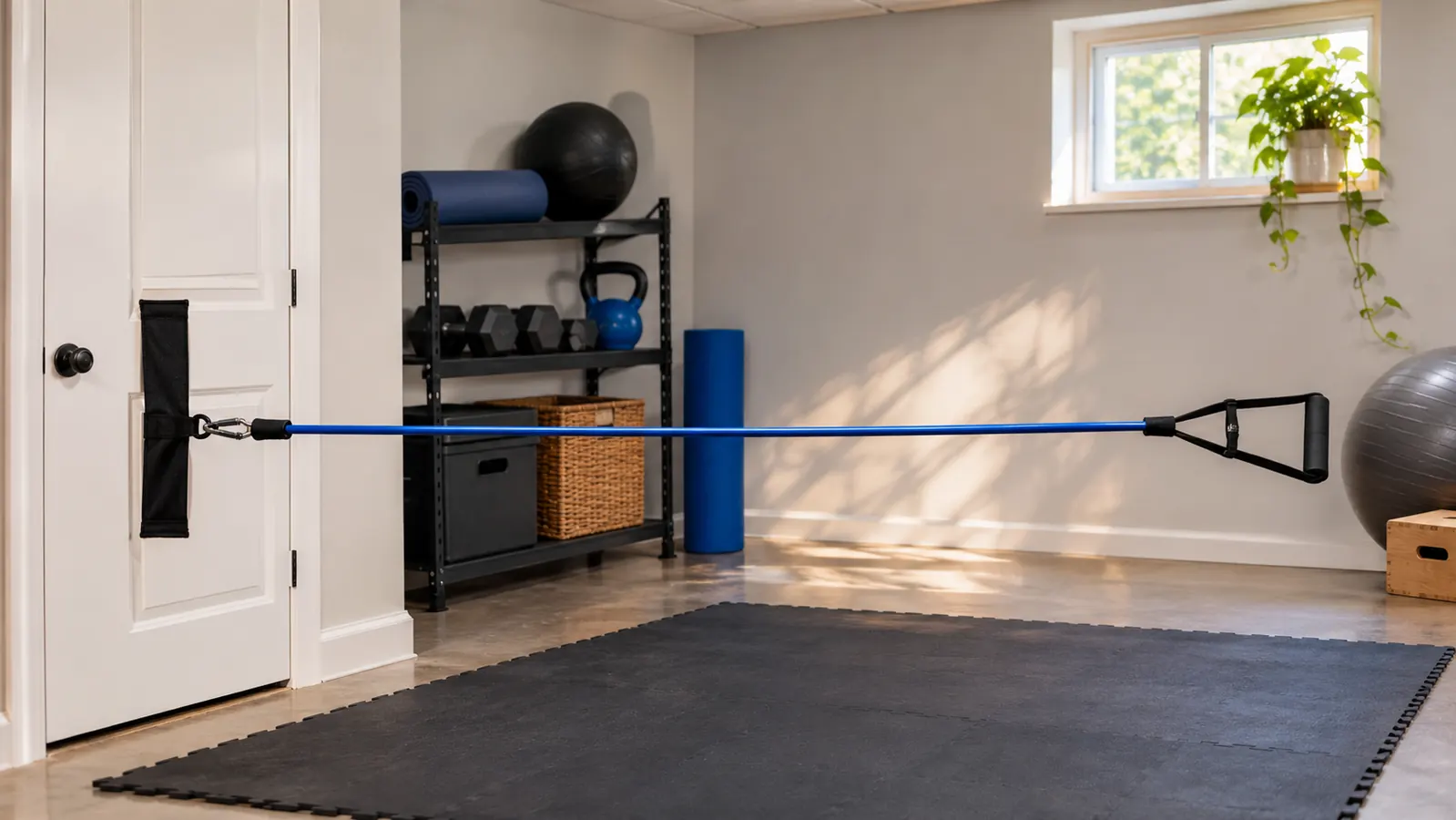
The door anchor is simple: a strap you close in a door, with a loop for the tube. It lets me do rows and presses from angles a floor exercise can't reach. The whole kit packs into a carry bag that weighs about two pounds, which means it lives in the basement when I'm training and in the car when we visit the grandkids. The set carries a two year limited warranty, and the included user manual actually shows the exercises instead of just listing them.
A Typical Morning With the Bands
If you're wondering what this looks like in practice, here's a Tuesday. I come downstairs, put the rubber mat down if it's not already there, and pull the carry bag off the hook. I start with the 10 lb tube for a few minutes of stretching. Shoulder circles, slow rows, a gentle stretch for the knee. Nothing heroic. Just enough to tell my body we're working.
Then I move to the work. Rows with the 20 lb tube, two sets of ten. Presses with the same tube, one set. Curls with the 20, because my arms are the first thing to let me know I'm aging. Then the ankle strap goes on for leg work, and I finish with the door anchor for a different angle on rows. The whole thing takes about half an hour, and the bands go back in the bag.
The reason I describe the routine is that the bands are the only piece of equipment that makes all of it possible in one corner of a basement. No machine, no rack, no bench. Just a bag, a door, and a rubber mat. For a retired shop teacher who doesn't want to drive anywhere at six in the morning, that's the whole ballgame.
Six Months of Tuesday Mornings
I've had the WHATAFIT bands long enough that the newness wore off and the routine set in. That's the test that matters. Equipment either becomes part of your morning or it ends up in a pile in the corner. These bands are part of my morning.
After months of use, the tubes still stretch smoothly. There's no cracking in the material, no fraying at the handles, no sign that the rubber is drying out. I keep them out of direct sunlight and I don't stretch them past their limit, but I don't baby them either. They hang on a hook by the workbench between sessions.
The door anchor still holds firmly. The handles still feel solid. The carry bag zipper still works, which is more than I can say for some gym bags I've owned. I expected the 10 lb tube to get loose and floppy after a while, the way old rubber bands do. It hasn't.
The honest version: the printed resistance numbers are a guide, not a precise measurement. A 20 lb tube doesn't feel exactly like 20 lb on a stack machine, because the resistance builds as you stretch it further. That's true of every band set I've used, and it's worth knowing before you buy. It doesn't bother me. I train to feel, not to match a number on a machine.
The Tradeoffs Nobody Mentions
Here's what I wish someone had told me before I bought my first set of bands. The resistance gets harder the further you stretch. That means the last few inches of a row are much harder than the first few. With free weights, the weight is the same through the whole movement. It's a different feel, and it took me a while to get used to it.
Bands also don't give you the same feedback on the way down. With a dumbbell, gravity lowers the weight for you and you control it. With a band, you're fighting the band both ways, which is actually a decent workout, but it's easy to rush the return part of a rep if you don't pay attention. I slow down and count to three on the way back.
The other tradeoff is that the tubes are long. You need room to stretch them. I use about six feet of clear floor in my basement, and I have to be careful not to stand too close to the workbench when I do a row. If your space is tight, you'll want to measure before you commit. None of this changes my overall opinion, but it's the kind of thing a review that only praises the product leaves out.
What Else I Considered
Before I settled on the WHATAFIT set, I looked at a few other options. I thought about free weights, and I still use a pair of light dumbbells for some exercises. But the bands are easier on my shoulder because the resistance is smooth and I control the speed. I also looked at a cable machine for the basement, and the floor space alone talked me out of it fast.
The thing that sold me on bands over the alternatives was the ankle straps. My left knee is stiff, and the leg exercises I can do with the straps are the closest I've found to the physical therapy exercises I was given, without needing a therapist in the room. I can't do that with a dumbbell.
I'm not saying bands replace everything. They don't. But for a 66-year-old who wants to stay strong at home, three or four mornings a week, they cover more of my needs than anything else I tried. And the WHATAFIT set does it without a gym membership, a trainer, or a single piece of equipment that needs plugging in.
What I Liked
- Five color-coded tubes from 10 to 50 lb that stack together, so you can add resistance in small steps
- Cushioned handles that don't dig into your palms, even on long sets
- Two ankle straps that make leg work possible without a machine
- Door anchor opens up rows and presses from angles a floor exercise can't reach
- Packs into a carry bag that weighs about two pounds, so it travels well
- Two year limited warranty and a user manual that actually shows the exercises
Where It Falls Short
- Resistance builds as you stretch, so the last few inches of a rep are the hardest
- You need a clear stretch of floor, roughly six feet, to use the tubes properly
- Printed resistance numbers are a guide, not an exact match to free weights
- The lightest tube may feel too easy if you're already strong, and the heaviest may not be enough for advanced lifters
I expected the 10 lb tube to get loose and floppy after a while, the way old rubber bands do. It hasn't.
Who This Is For
This set is for you if you're in your 60s, you want to keep your strength, and you'd rather train at home than in a gym. It's for people who need to start light and build slowly, because the five tubes let you add resistance in steps as small as 10 lb. It's for people with a stiff knee or a cranky shoulder who want to do the work without loading a joint with a heavy weight.
It's also for people who travel or spend time at the grandkids' house. The whole kit fits in a bag you can toss in the car. I've taken it with us more times than I can count, and it's a lot easier to keep a routine going when the routine fits in a two pound bag.
Who Should Skip It
Skip this set if you're already lifting heavy and you need serious resistance. The heaviest tube is rated at 50 lb, and even stacked, bands don't feel like a heavy barbell. If you're training for max strength, you'll outgrow these.
Skip it if you don't have a clear stretch of floor. You need room to extend the tubes fully, and a cluttered corner will frustrate you. And if you prefer the exact, consistent weight of free weights through the whole movement, bands will feel different and you should try a friend's set before you buy your own.
One more thing, and I mean it: check with your doctor before you start any new program. I'm a retired shop teacher, not a medical professional. What worked for my knee and shoulder is what worked for me. Your situation is yours.
Start with the lightest tube and go from there
I've used the WHATAFIT resistance bands for months of daily training after 60, and they're still the first thing I reach for in the morning. Five tubes, cushioned handles, ankle straps, a door anchor, and a carry bag that weighs about two pounds. If that sounds like your kind of setup, check today's price on Amazon.
Amazon Check Today's Price on Amazon →