The first time I put on a weighted vest, I was 66 years old, standing in my basement in Reading, Pennsylvania, and I felt like a turtle that someone had strapped a roof to. My name is Walt Brenneman. I'm a retired shop teacher, I've got a stiff left knee from decades on concrete floors, and I've been strength training at home for about five years, three or four mornings a week. The ZELUS weighted vest is the piece of gear I was most skeptical about before I bought it, and the one I've reached for most consistently since. This is my honest review after months of daily use.
I want to be plain with you up front: I'm not a doctor, I'm not a trainer, and I'm not selling you anything except my experience. If you're over 60 and thinking about adding weight to your walks or your bodyweight work, check with your doctor first. That's not a disclaimer I'm burying at the bottom. It's the most important sentence in this review.
The Quick Verdict
The ZELUS weighted vest is a well-made, adjustable piece of home training gear that does exactly what it promises: it adds load to bodyweight work and walks. It's not magic, it won't fix your knees, and it takes a week to get used to. But it's the most useful piece of equipment in my basement right now.
Amazon Check Today's Price →Want to add load to your home workouts without buying a rack of dumbbells?
The ZELUS weighted vest is the piece of gear I've reached for most mornings for months. It's adjustable, it's comfortable enough for a full workout, and it makes bodyweight exercises feel honest again. Check today's price on Amazon and see if it fits your routine.
Amazon Check Today's Price on Amazon →How I've Used It
My routine is simple because simple is what survives. Three or four mornings a week I go down to the corner of my basement with the rubber mat, put on the ZELUS weighted vest over a t-shirt, and do a circuit of bodyweight exercises: squats, lunges, push-ups, rows with a band, and some core work. The vest adds weight to everything at once, which is the whole point. I don't have to hold a dumbbell in each hand and I don't have to think about where the load is. It's just on me, and every movement gets harder in a way that feels natural.
I started with the 8 lb version, which is the size I bought, and I wore it for about two weeks before I added anything else. The first few sessions I felt every pound. My shoulders complained a little, my breathing was harder, and I had to drop my push-up count. That's not a flaw in the vest. That's what adding weight is supposed to feel like when you're 66 and you've been training for years but never with load on your torso.
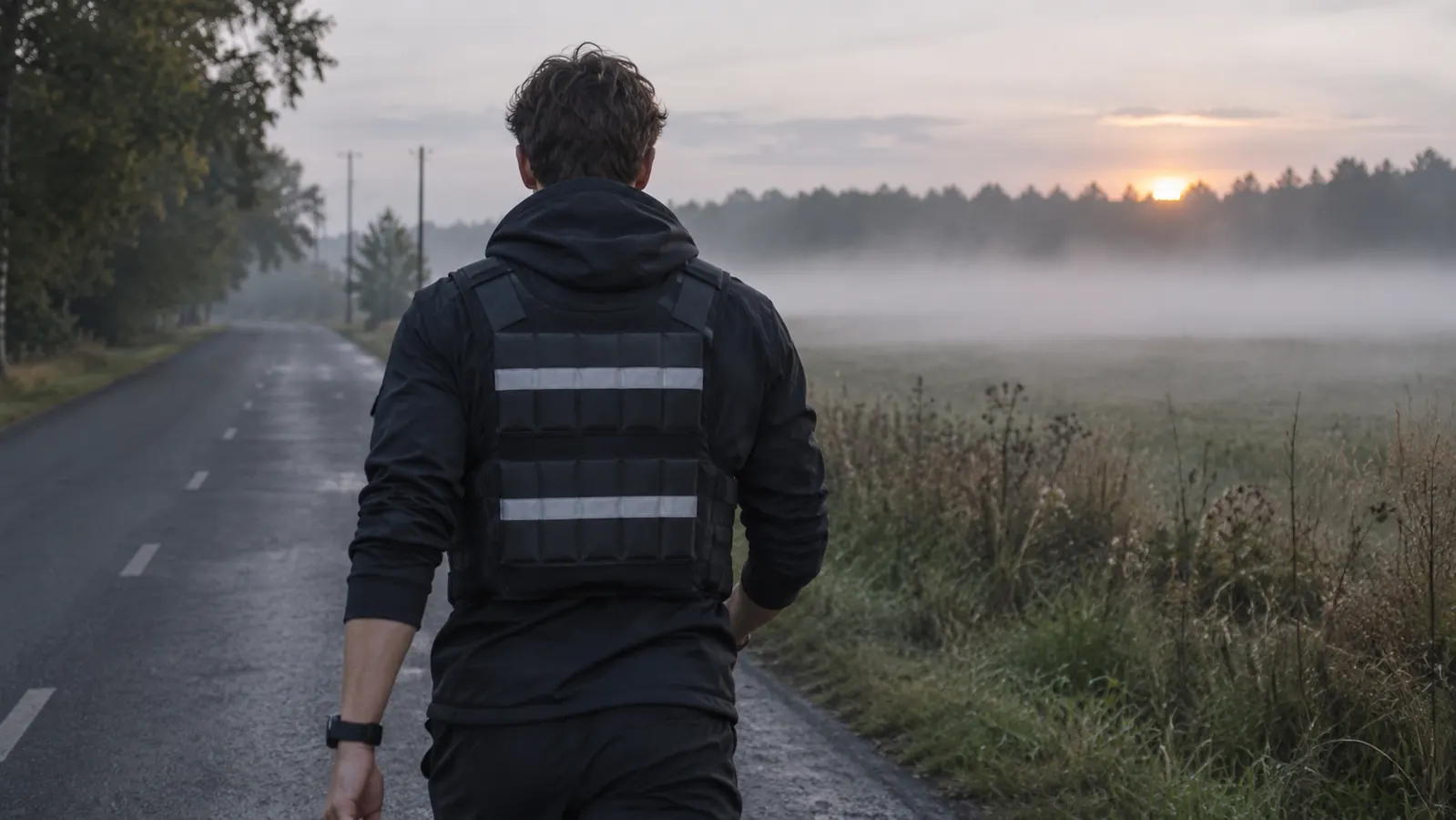
After a few weeks I also wore it on walks around the property. The reflective stripes matter more than you'd think. I walk early, the light is gray, and anything that makes me visible to a car is worth having. The vest has 360 degree reflective strips, and I noticed them the first time a neighbor's truck came around the bend. He saw me. I saw him see me. That's the whole job.
One morning last November, I put the vest on for a walk and the driveway had a slick patch of frost. I slowed down, took shorter steps, and got past it without a wobble. That's the thing about training at 66: you read the conditions and adjust. The vest doesn't change that, it just makes the honest work harder. I keep a small notebook on the workbench, and on the first of each month I write down how many sessions I managed and how the exercises felt. In December I wrote 'squats felt easier than October.' In January I wrote 'push-ups still hard with the vest.' Both notes are true, and both are useful. The notebook is the part of this habit that nobody talks about, but it's the part that kept me going.
What the ZELUS Weighted Vest Actually Is
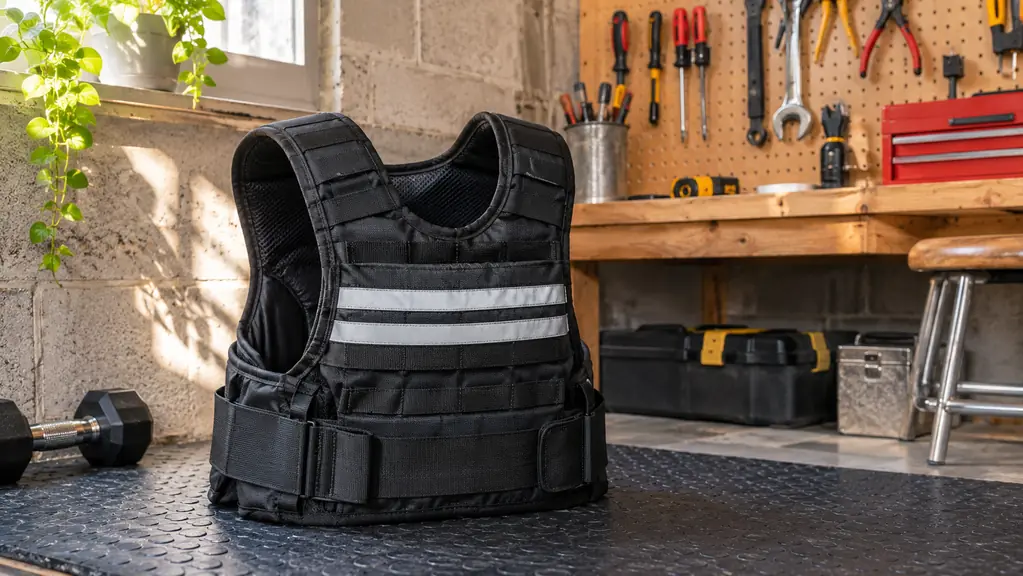
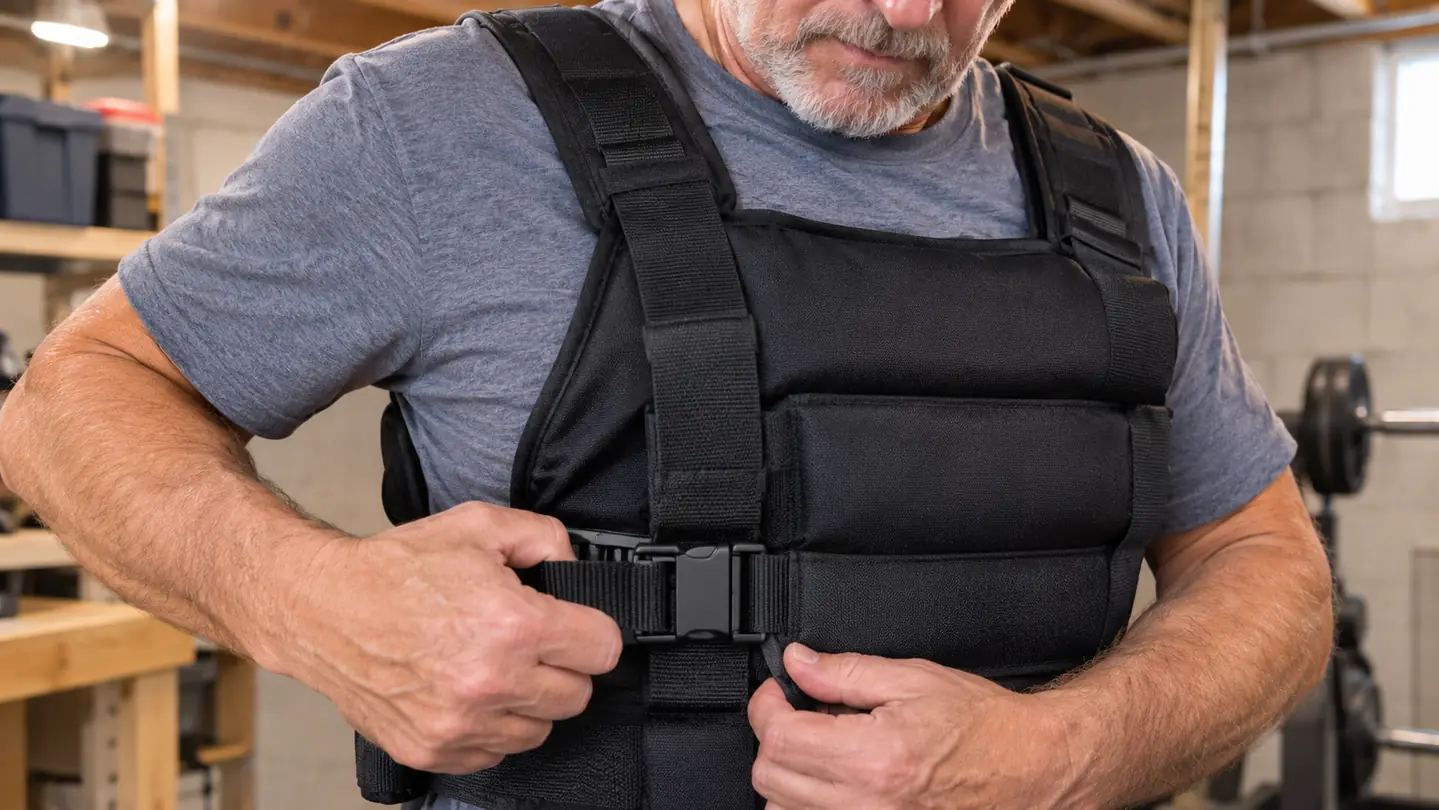
The specs are straightforward. The ZELUS weighted vest is made with Lycra fabric, SBR, and iron sand, and the version I have weighs 8 lb. The buckle closure adjusts to fit, and the listing says it fits a range of body sizes. I'm not going to pretend I measured my chest with a tailor's tape before ordering. I adjusted the straps, it fit snugly over a t-shirt, and it stayed put through squats and push-ups. That's the test that matters.
The weight comes from iron sand, which means it sits close to your body and doesn't swing around the way a backpack full of books does. I've worn backpacks. This is different. The load is distributed, and after a few minutes you stop thinking about it, which is exactly what you want when you're trying to focus on form.
There are also arm pockets for your essentials. I keep a phone in one and a key in the other when I walk. It's a small thing, but it means I don't have to carry anything in my hands, and when you're using a vest to add load, having your hands free is the difference between a walk and a workout.
Here are the exact numbers from the listing, because I know you'll want them. The ZELUS line comes in 6, 8, 12, 16, 20, 25, and 30 lb versions. I bought the 8 lb because I wanted to start conservative at 66, and the adjustable buckle straps fit a chest starting at 31.5 inches, according to the listing. The materials are Lycra fabric, SBR, and iron sand, and the listing notes the vest is tested to meet California Proposition 65 standards. I don't understand half of what that certification means, but I do understand that a company willing to put a safety standard on the box is thinking about the same things I am. That mattered to me before I clicked buy, and it matters more now that I've worn the vest for months.
What Months of Daily Use Taught Me
The honest version of this review is that the ZELUS weighted vest is not exciting. It's a piece of fabric with weight in it. But that's why I kept using it. There's no screen, no app, no battery to charge, nothing to set up. I put it on, I do the work, I take it off. For a 66-year-old man who wants to stay strong enough to get up off the floor and lift a bag of mulch, that simplicity is the feature.
The thing that surprised me most is how much harder bodyweight exercises become with just 8 lb. I've been doing push-ups for five years. The first time I wore the vest, I did ten and felt like I'd done thirty. Squats felt different too, not just harder but more stable, because the weight forces you to brace. I've read that loaded carries and weighted walks are good for bone health, and I've read that the research is still mixed. I'm not going to overstate it. What I can tell you is that my legs feel stronger, my balance on stairs feels better, and I have not once regretted putting the vest on.
I also learned what the vest won't do. It won't fix my left knee. It won't make my right shoulder stop complaining on overhead work. It won't do the workout for me. On the mornings I don't feel like training, the vest sits on the workbench and does nothing. The gear is only as good as the habit, and the habit is the hard part.
Here's a concrete example from my own life. Last spring, before I started wearing the vest consistently, I carried a 40 lb bag of mulch from the car to the garden and had to stop twice to rest. This spring, after months of wearing the ZELUS vest on walks and bodyweight circuits, I carried the same bag in one trip and didn't stop. I'm not claiming the vest deserves all the credit. I'm also walking more and sleeping better. But the vest is the thing I changed, and the change is real. My wife Carol noticed it too. She said I don't grunt when I stand up from the floor anymore. That's the kind of progress that doesn't show up in a gym log, and it's the kind that matters most at my age.
Comfort, Fit, and the Things That Annoy Me
Let me be fair about the downsides. The vest is warm. SBR and Lycra over a t-shirt in a basement that doesn't have air conditioning means I sweat more than I do without it. That's physics, not a design flaw, but you should know it before you buy. I train in the morning when the basement is cool, and I still work up a good sweat.
The buckle closure takes a few tries to get right. The first week I adjusted it too loose and the vest shifted on push-ups. I tightened it, and it was fine. But it's not a piece of gear you put on once and forget. You'll fiddle with the straps. That's normal.
The other thing I'll say is that the 8 lb version feels light if you're already strong. I bought 8 lb because I wanted to start conservative at my age, and I'm glad I did. But if you're a younger lifter or someone who's been training with heavy weights, you'll probably want one of the heavier versions. The ZELUS line goes up to 30 lb, so there's room to grow. I don't need that room. You might.
I'll also tell you about the morning I almost gave up on it. Three weeks in, I wore the vest for a set of lunges and the bottom edge dug into my ribs on every rep. I was annoyed, and I nearly set the vest aside for good. Then I stopped, loosened the buckles, and pulled the whole thing down half an inch so the weight sat lower on my torso. The digging stopped immediately. The lesson stuck: the vest needs to sit low and snug, like a good backpack, not high like a chest strap. Now I check the fit every time I put it on, and it takes about ten seconds. That's the closest thing to a real complaint I have, and it turned out to be my own mistake, not the vest's.
What I Liked
- Adjustable buckle straps fit a range of body sizes
- Reflective stripes make early morning walks safer
- Iron sand weight sits close to the body and doesn't swing
- Arm pockets keep phone and keys handy
- Simple, durable, no setup, no batteries, no app
Where It Falls Short
- Runs warm during a full workout
- Buckle straps need a few adjustments to get the fit right
- 8 lb feels light if you're already strong, so plan to size up
- Not a substitute for medical advice on joints or balance
The ZELUS weighted vest won't fix your knees and it won't do the workout for you. What it will do is make every squat, push-up, and walk a little harder, and that little bit of extra load adds up over months.
Who This Is For
The ZELUS weighted vest is for someone like me: over 60, training at home, and looking for a way to make bodyweight work harder without a pile of new equipment. It's for the person who walks every day and wants to turn that walk into something closer to a workout. It's for the grandparent who wants to be able to get up off the floor and play with the grandkids, and who understands that strength is something you build a little bit at a time.
It's also for people who like gear that doesn't need a manual. If you want a piece of equipment that works the first time, every time, with no setup, this is it. The ZELUS weighted vest is about as close to plug-and-play as strength training gets, and for a retired guy who has had enough of complicated machines, that's a real virtue.
Who Should Skip It
You should skip the ZELUS weighted vest if you have back problems, balance issues, or any condition where added weight on your torso is a risk. I mean that seriously. A weighted vest changes your center of gravity, and if you're unsteady on your feet, that's not a challenge to overcome, it's a hazard. Talk to your doctor first. If your doctor says no, listen.
You should also skip it if you're looking for a dramatic transformation. The vest will not make you lose weight by itself. It will not fix your joints. It will not turn a 20 minute walk into something it isn't. It adds load to work you're already doing. That's all. If you want a product that does the work for you, this isn't it, and honestly, nothing is.
And if you're someone who hates the feeling of anything snug around your chest, you should probably try one on before you commit. The vest is meant to fit snugly. That's how the weight stays distributed. Some people never get used to that feeling. I did, but I'm not you.
The vest I've reached for most mornings for months
If you're over 60 and your doctor has cleared you for strength training, the ZELUS weighted vest is a simple, honest way to add load to the work you're already doing. It's not exciting. It just works. Check today's price on Amazon and decide for yourself.
Amazon Check Today's Price on Amazon →