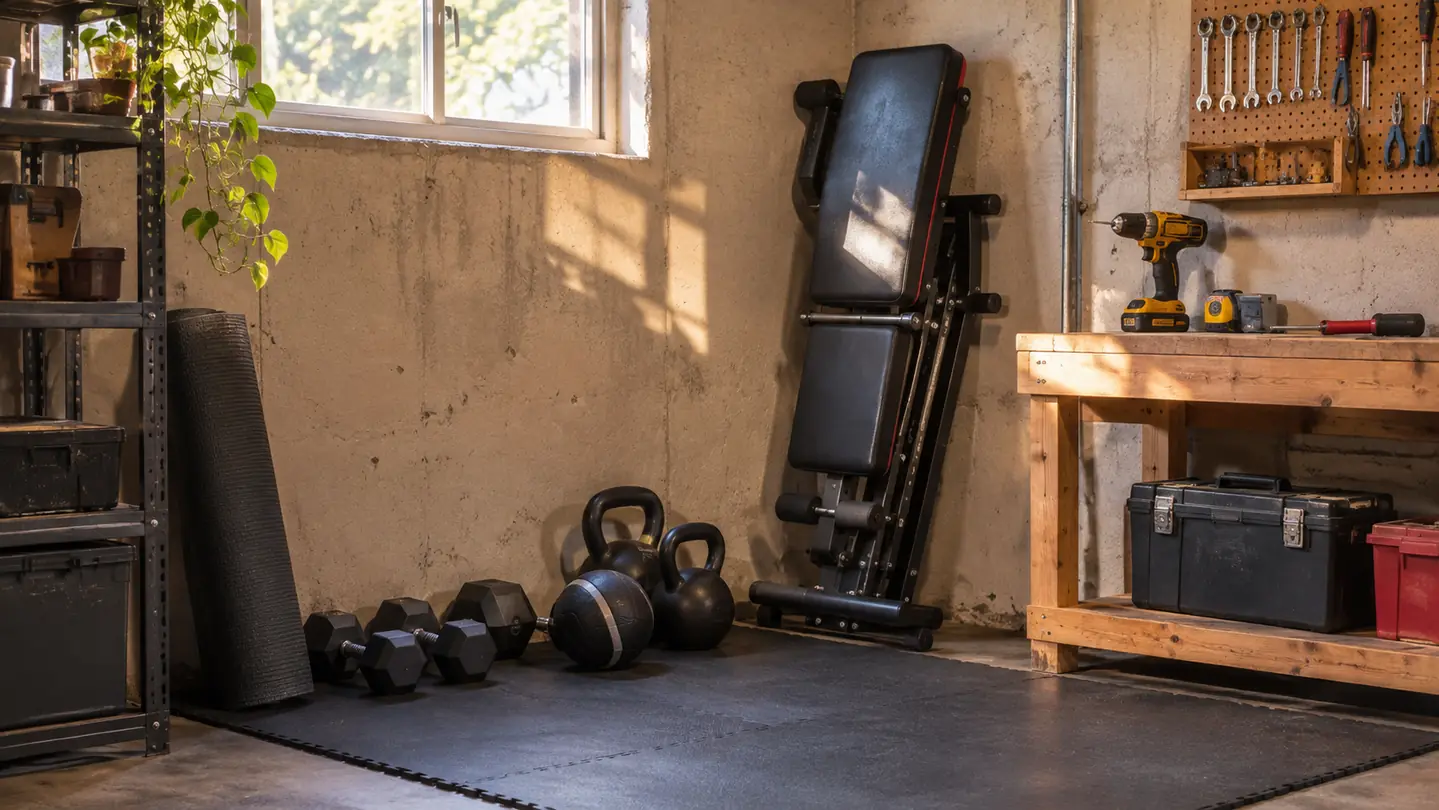
I almost didn't buy a weight bench at all. I talked myself out of it three times. I told myself the floor was fine, that I could do push-ups, that a bench would just take up space in the basement next to my workbench. Then I tried to get up off the floor after playing with my grandkids one afternoon, and my stiff left knee made its opinion known. That was the moment I stopped negotiating with myself.
That was about five years ago. I'm 66 now, a retired high school shop teacher living outside Reading, Pennsylvania, and I've been lifting in a corner of my basement three or four mornings a week ever since. No gym membership, no trainer, just a rubber mat, a few weights, and the FLYBIRD adjustable bench I settled on after more research than I'd like to admit.
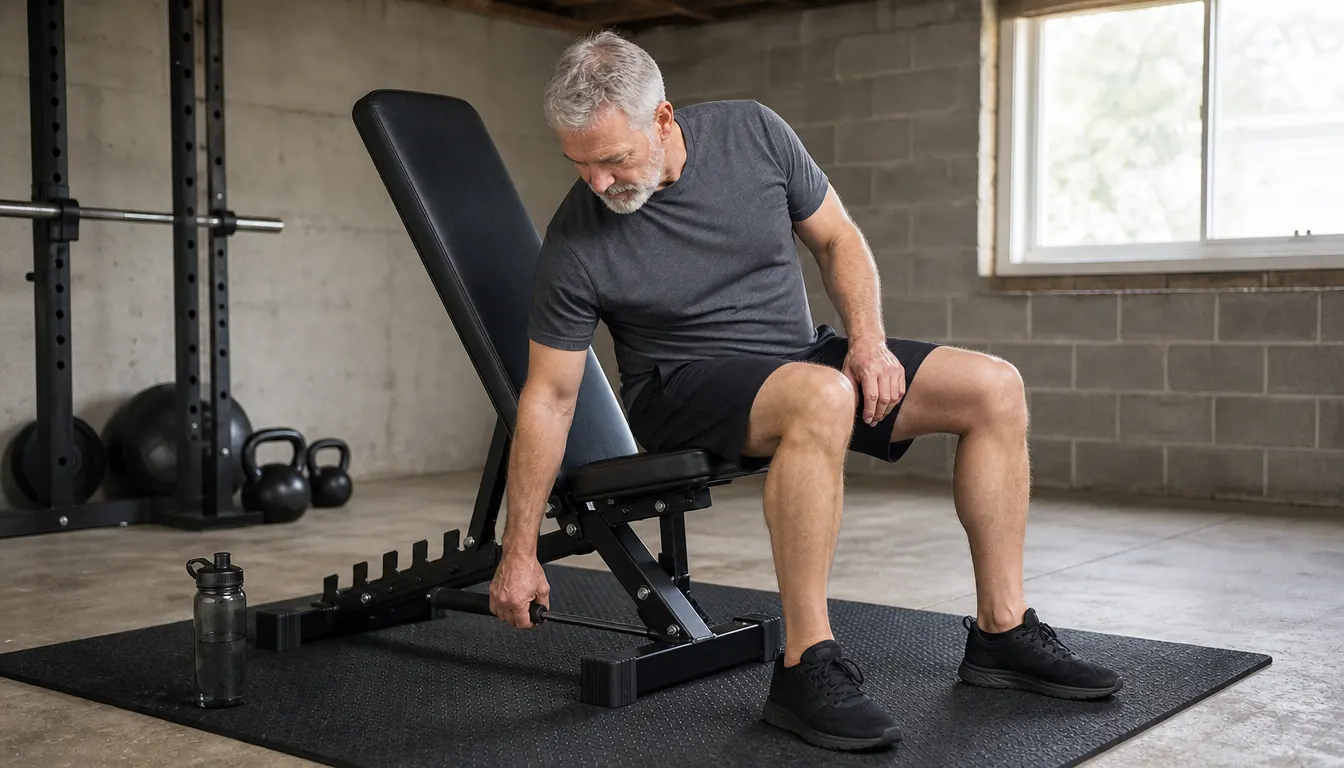
Why the FLYBIRD? Because the number that mattered most to me wasn't on any flashy brochure. It was the 750-pound certified capacity, ASTM tested, printed right in the title. I'm not a small guy, and at my age I don't want to find out whether a bench can hold me by testing it with my back. This one is built from solid alloy steel with reinforced triangle structures, and it weighs 23 pounds. It feels planted. That's the word I keep coming back to: planted.
The height was the second thing I checked. It sits at 17.38 inches, which is the IPF competition standard. I've never competed at anything in my life, but that number matters because it means my feet stay flat on the floor when I'm pressing. With a left knee that stiffens up and a right shoulder that complains on anything overhead, having my feet planted properly is half the battle. I learned that the hard way on a bench that was too tall.
The adjustments are simple enough for me, and I mean that as a compliment. You pull the support bar and the backrest moves through eight positions, the seat through four, and there are three leg holder positions. No tools, no fighting with pins. I can go from flat to a supported incline in a few seconds, so I actually change the angle instead of leaving it set forever. My wife Carol sometimes trains with me, and she can adjust it just as easily.
I've had it long enough now that the newness has worn off, and what's left is the part I care about: it does what it's supposed to do, every time, without wobbling or shifting. There's no creaking when I sit down, no rocking when I press, no moment where I wonder if today is the day it gives. For a guy who spent thirty years teaching shop and checking that things were square and true, that's the whole review.
A 750-pound certified rating on a bench you're going to trust with your back is worth more than any feature list I could write.
A bench that stays planted so you can focus on the lift
If you're tired of wondering whether your equipment can hold you, the FLYBIRD adjustable bench is worth a look. It folds flat when you're done, adjusts in seconds, and carries a 750-pound certified rating.
Amazon Check Today's Price on Amazon →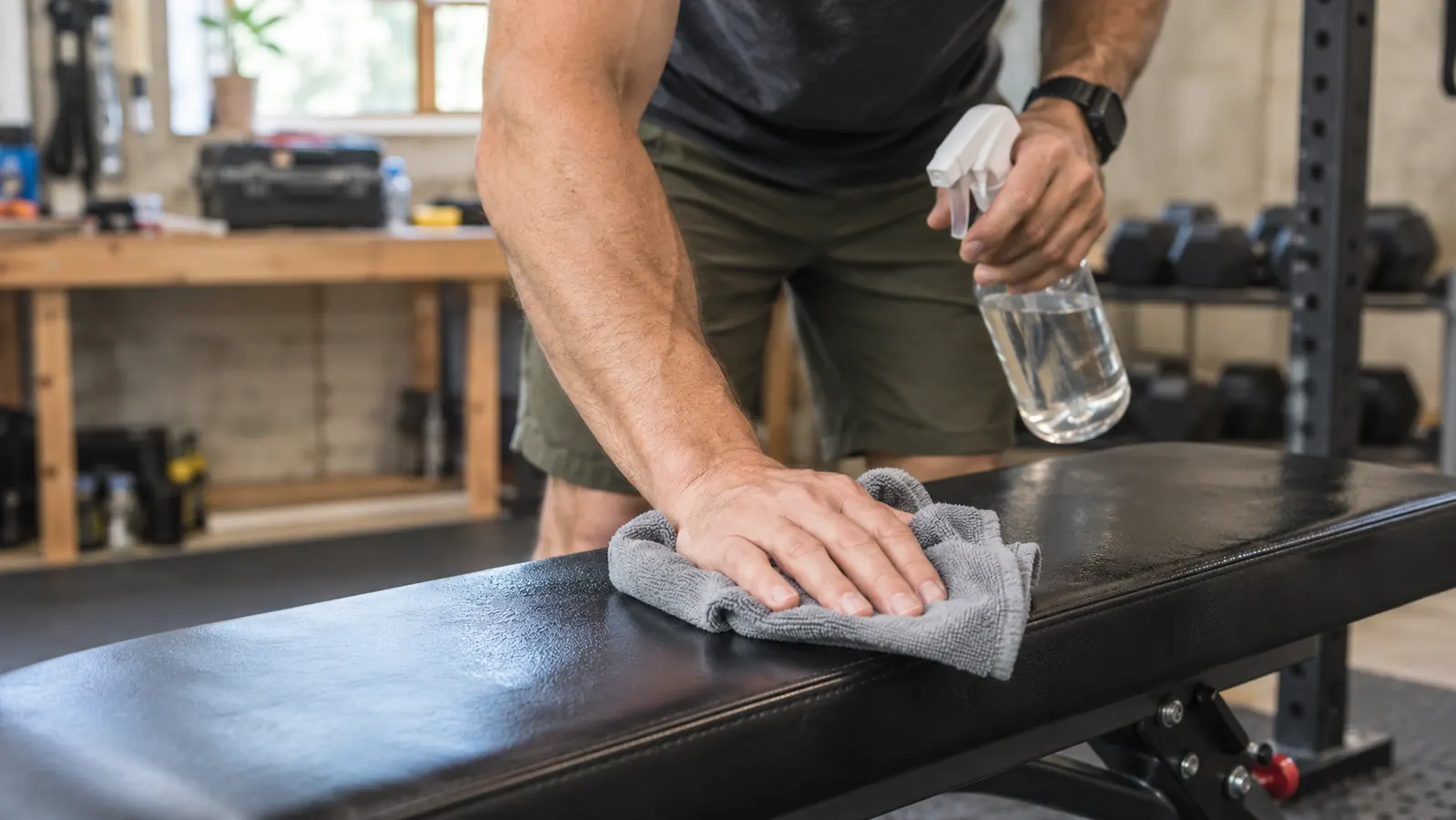
Here's what I didn't expect: the bench changed how I think about the workout itself. When I stopped worrying about whether the equipment was stable, I started paying attention to the lift. I do presses with my back supported, rows without craning my neck, and I can set the backrest to an angle that doesn't bother my shoulder. That sounds like a small thing, but when your body has a few complaints, finding a position that works is the difference between showing up and quitting. I'm not chasing a number on the bar anymore. I'm chasing the ability to keep doing this next year, and the year after that.
It folds up when I'm done, which matters more than you'd think. Our basement isn't a gym, it's a basement. There's my old workbench a few feet away, Carol's shelves, the usual clutter of thirty years of living. When I finish a session, the bench folds flat and leans against the wall, and the corner goes back to being a corner. My wife appreciates that more than I do.
The upholstery is a sweat-proof leather material, and I wipe it down after every session. At my age I sweat more than I lift, so that's not a small thing either. And the company has been designing and producing fitness equipment for twenty years. The warranty is one year, which I'll take, but honestly I bought this bench because of the engineering, not the paperwork.
I'm not going to tell you this bench will make you strong, because that's on you. I'm not going to tell you it fixed my knee or my shoulder, because it didn't. What it did was take one variable out of the equation. When I get down to that rubber mat at six in the morning, I know the bench will hold me, the height is right, and I can adjust it without a fight. That's what lets a 66-year-old retired shop teacher keep showing up three or four mornings a week.
What I'd Tell You If We Were Sitting at My Kitchen Table
If you were sitting across from me with a cup of coffee, here's what I'd say. First, check with your doctor before you start any program, because I'm a shop teacher, not a physician, and I don't give medical advice. Second, don't overthink the weight on the bar. Think about the bench under you. A bench that wobbles will steal your confidence, and a bench at the wrong height will steal your form. The FLYBIRD gave me a solid platform at a height that works, and it folds away when I'm done. If you're in your sixties and you want to train at home, start with a bench that makes you feel safe. Everything else follows from there.
Give yourself a stable place to start
The FLYBIRD adjustable bench is rated for 750 pounds, adjusts in seconds, and folds flat when you're done. If that sounds like the bench you've been putting off buying, it's worth a closer look.
Amazon See Today's Price on Amazon →