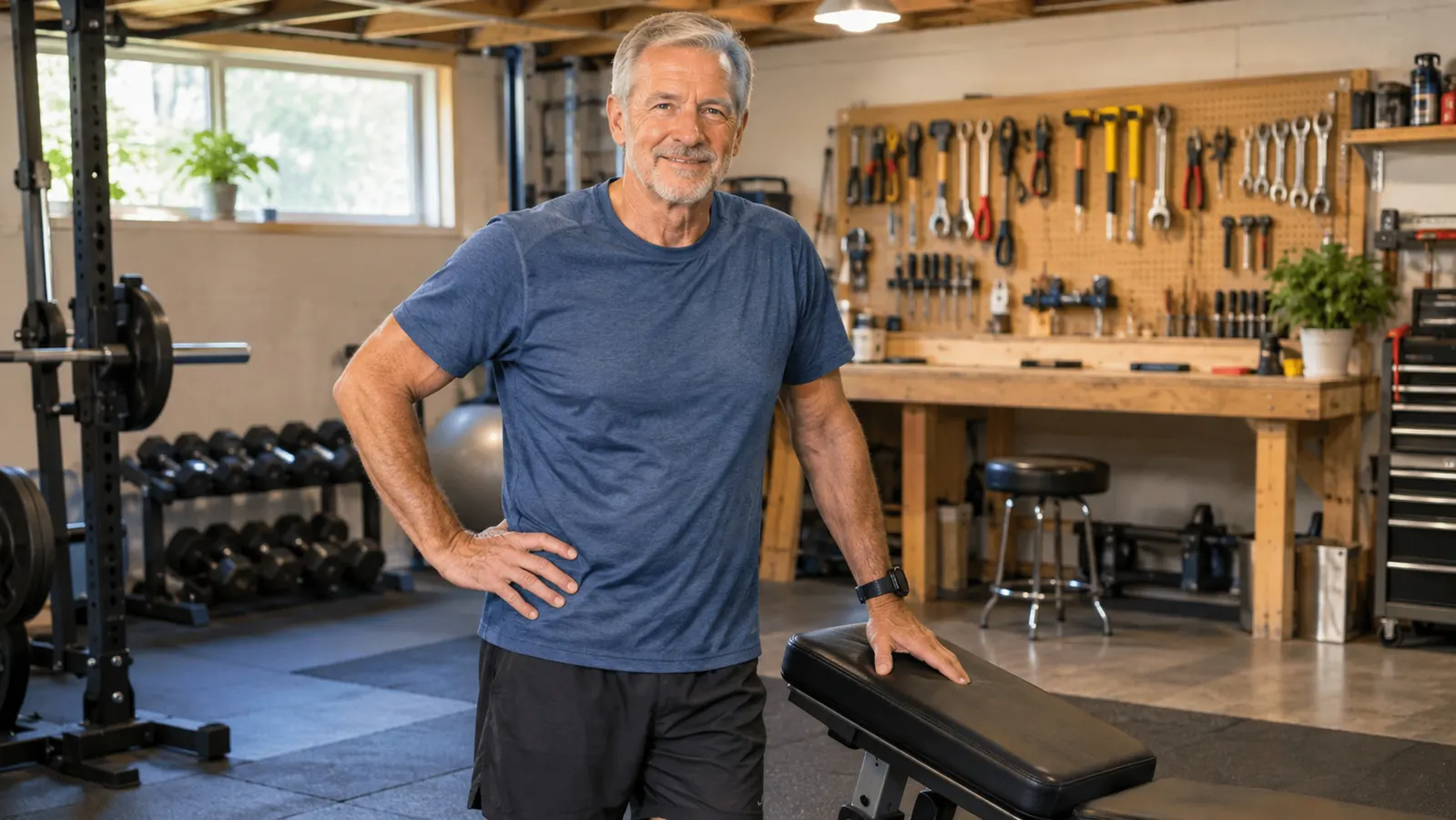
If you are shopping for a weight bench in your sixties, you have probably narrowed it down to two very different ideas. One is the FLYBIRD adjustable weight bench, a foldable bench with eight backrest positions, four seat positions, three leg holder positions, and a 750 pound certified capacity. The other is a plain flat bench, the kind you see in school gyms, with one fixed angle and nothing to adjust. I have trained on both in my basement over the last five years, and the right answer depends on what you actually want to do with it.
Short answer: for most people over 60 who want to keep lifting at home, the FLYBIRD adjustable weight bench is the better choice. It does more, it is built to a 17.38 inch IPF competition height, and it folds out of the way when Carol wants the basement back. A flat bench wins only if you plan to do one thing, flat presses, and you want the simplest possible piece of equipment. Here is the honest breakdown.
| FLYBIRD Adjustable Weight Bench | A Flat Bench | |
|---|---|---|
| Adjustability | 8 backrest positions, 4 seat positions, 3 leg holder positions, changed with a pull of the support bar | One fixed angle, nothing to adjust |
| Height | 17.38 inch IPF competition height, feet stay flat when pressing | Height varies by model, often lower |
| Weight capacity | 750 pound certified capacity on an alloy steel frame | Usually 300 to 600 pounds depending on the model |
| Stability | 3X reinforced triangle structures under the frame | Basic welded frame, stable but no reinforcement claims |
| Simplicity | More parts and positions to learn at first | No levers, no positions, just lie down and press |
| Storage | Folds flat for storage against a wall | Stays assembled, thin profile leans against a wall |
| Cost | Higher upfront cost for the extra range | Usually costs less upfront |
| Best for | Seniors who want presses, rows, and ab work at different angles | Seniors who only want flat presses and dumbbell work |
Where FLYBIRD Wins
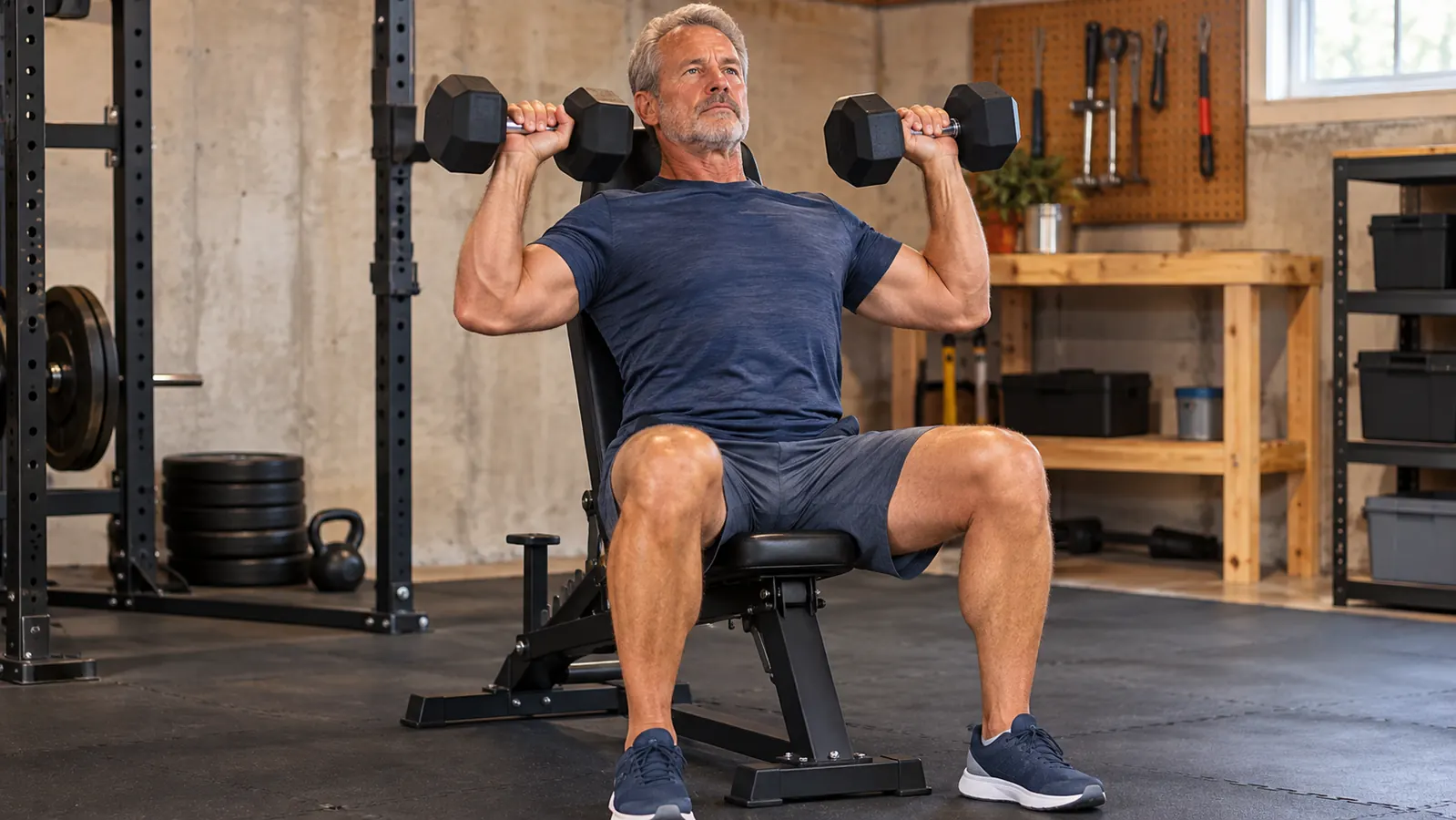
The biggest difference is range. With eight backrest positions, four seat positions, and three leg holder positions, the FLYBIRD lets me do things a flat bench simply cannot. I can set the backrest upright for seated shoulder presses, which matters because my right shoulder complains overhead and a slight angle takes the strain off. I can drop the backrest lower for ab work. I can raise the seat for dumbbell rows. One bench replaces three, and in a basement corner that is a real advantage.
The 17.38 inch height is the other reason I chose it. That is the IPF competition standard, which means the bench sits at the right height for my feet to stay flat on the floor when I press. On a lower bench, I had to brace awkwardly, and with a stiff left knee that got uncomfortable fast. The frame is alloy steel with 3X reinforced triangle structures, and the 750 pound certified capacity tells me this bench is not going anywhere when I am under load. At 23 pounds, I can also move it around the basement without calling for help.
Where A Flat Bench Wins
I am not going to pretend the flat bench has no place. It does. A flat bench is the simplest piece of gym equipment you can own. There is nothing to adjust, nothing to learn, nothing to break. You set it on the mat, you lie down, you press. For someone who only wants flat barbell or dumbbell presses and does not care about angles, that simplicity is a genuine advantage. It is also a little easier to clean, because there are no hinges or levers to collect dust.
A basic flat bench usually costs less upfront, and it takes up less floor space when you slide it against a wall. If your home gym is a corner of a bedroom and you only have room for one movement, a flat bench may be all you need. I would not argue with that choice. I started with a flat bench myself, and it taught me the habit of showing up three mornings a week. The habit matters more than the equipment.
The bench I kept after testing both
Eight backrest positions, a 17.38 inch competition height, and a 750 pound certified frame. If you want one bench that handles flat presses, angled work, and seated exercises, this is the one I use three mornings a week.
Amazon Check Today's Price on Amazon →How I Tested Both Benches
I am a retired shop teacher, so I tend to test things the same way I taught my students to test things: use it the way you would actually use it, then try to break it. I ran the FLYBIRD through a full week of sessions. Monday was flat presses. Wednesday was seated shoulder presses with the backrest upright. Friday was rows and ab work with the backrest at different angles. I left the bench set up for a month before I folded it for the first time, just to see if the frame stayed solid.
The flat bench I compared it against was an older model I had in the basement for years. It did exactly one thing well: flat presses. The pad was thin, the height was a little low for me, and my feet did not sit flat the way they do on the FLYBIRD. But it never wobbled, never broke, and never needed a single repair. I can see why a flat bench is still the default in a lot of home gyms.
I also paid attention to the small things. The FLYBIRD pad is sweat-proof leather, which matters in a basement that gets humid in a Pennsylvania summer. The support bar is easy to reach, so I can change positions between sets without getting up. The flat bench had none of that, because it did not need any of it. Different tools for different jobs.
What Eight Backrest Positions Actually Mean for a 66-Year-Old
When you are 66, a bench is not just a place to lie down. It is a tool for working around the parts of your body that complain. My right shoulder does not like a heavy overhead press from a completely upright position, but it tolerates a slight backward angle. My stiff left knee does not like climbing onto a high bench, but the 17.38 inch height is low enough that I can sit down without a step. Those small adjustments are exactly what the FLYBIRD gives you.
The four seat positions matter more than I expected. On a flat bench, my hips and back were in the same line for every exercise. With the FLYBIRD, I can tilt the seat slightly for seated dumbbell work, which takes pressure off my lower back. The three leg holder positions are useful for ab work, because I can hook my feet and keep my hips down without straining my knee.
I am not saying you need all eight positions on day one. You do not. But you will be glad they are there in year two, when your body changes and you want to try a different angle instead of buying a new bench. That is the real argument for the FLYBIRD over a flat bench: it grows with you.
What Nobody Tells You About Bench Pressing at 60
Nobody tells you that getting off the bench is harder than the lift. At 66, I do not bounce up like I did at 40. I roll to my side, put a hand on the bench, and push myself up. The FLYBIRD makes that easier because the bench is low enough that I can do it without twisting my knee. On my old flat bench, which was a little taller, I had to be careful every single time.
Nobody tells you that you will spend more time changing positions than lifting. With the FLYBIRD, I pull the support bar and the backrest moves to the angle I want in seconds. That sounds small, but when you are doing three or four exercises in a session, it saves a lot of reaching and fiddling. A flat bench has no positions to change, which is exactly why some people prefer it.
And nobody tells you that the bench is the one piece of equipment you will use for almost everything. Rows, presses, step-ups, ab work, even just sitting down to put on my lifting shoes. The FLYBIRD earns its spot in the basement because it is never in the way and always ready. That is the kind of quiet reliability I care about at my age.
Three Things to Check Before You Buy Any Bench
First, check the height. The FLYBIRD is built to the 17.38 inch IPF standard, which is the right height for most people to keep their feet flat on the floor during a press. A bench that is too high or too low will make your lower back work harder than it should. Measure your own setup before you order anything.
Second, check the weight capacity and the frame. The FLYBIRD is rated for 750 pounds and uses an alloy steel frame with 3X reinforced triangle structures. That is plenty for me, and it is plenty for most home lifters. If a bench does not list its capacity, or if the frame looks thin, keep shopping.
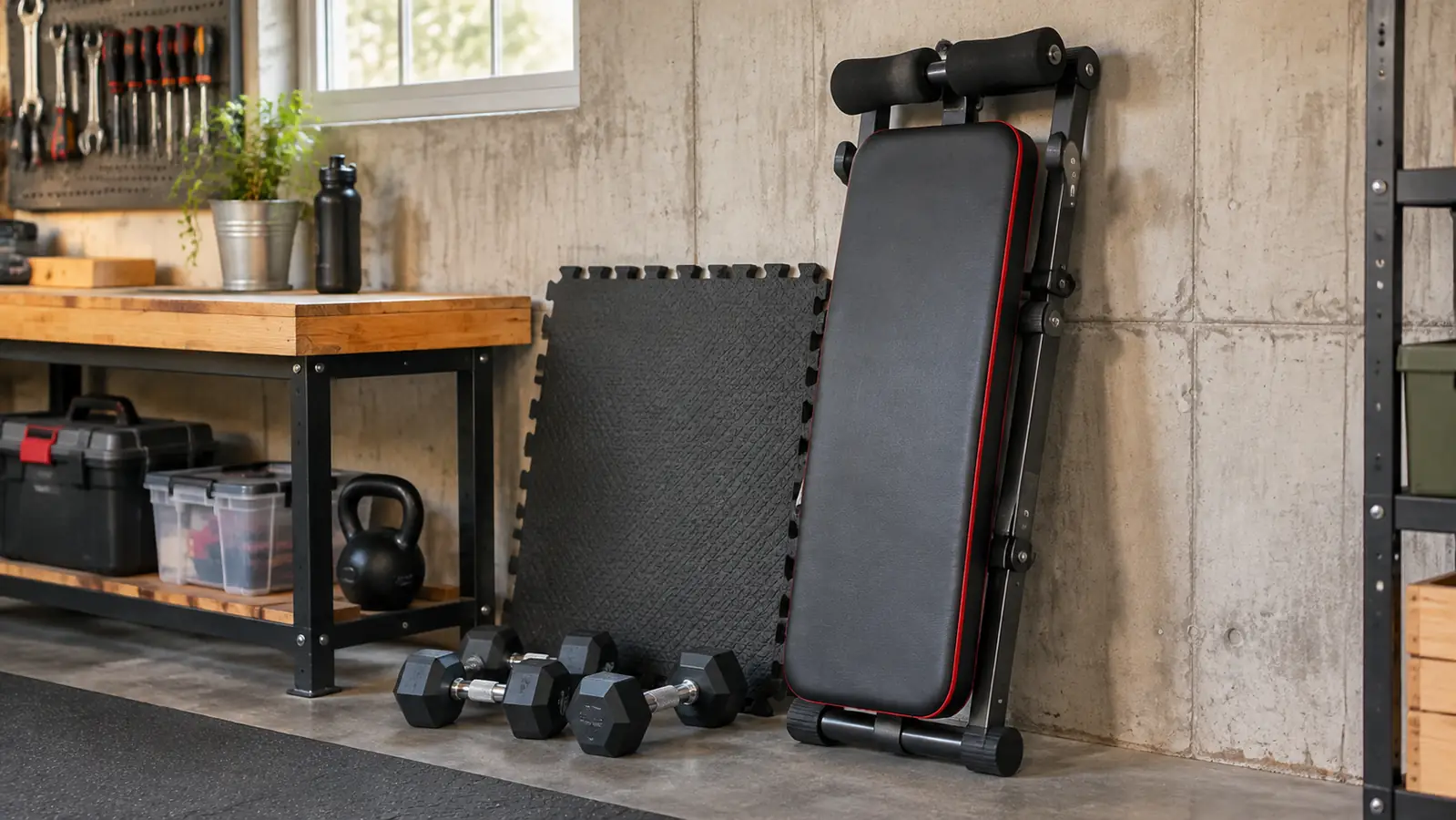
Third, think about storage. The FLYBIRD folds flat, which is a big deal in a basement that also holds Carol's holiday decorations and my workbench. A flat bench does not fold, but it is thin enough to lean against a wall. Decide where the bench will live before you buy, because a bench that has to be moved out of the way every day is a bench you will stop using.
The Bottom Line
If I had to make the choice today, I would buy the FLYBIRD adjustable weight bench again. The range of positions, the 17.38 inch competition height, the 750 pound certified capacity, and the foldable frame add up to a bench that does everything I need and nothing I have to fight with. It is not the cheapest option, but it is the one I reach for three or four mornings a week, and it has held up for years.
A flat bench is a fine tool. It is simple, affordable, and honest. But for a 66-year-old with a stiff knee and a cranky shoulder, the FLYBIRD is the better fit. Check with your doctor before you start any new program, and if you decide the FLYBIRD is right for you, I would order it today. The bench that makes you want to train is the bench that will keep you training.
Who Should Buy Which
Buy the FLYBIRD adjustable weight bench if you want to do more than flat presses, if you have a shoulder that likes a slight angle, if you want to fold the bench out of the way, and if you want one piece of equipment that grows with you. It costs more upfront, but it replaces several pieces of equipment and it is built to last. The 1 year warranty and the 7 years of spare part availability tell me the company expects this bench to be around for a while.
Buy a flat bench if you only ever plan to do flat presses, if you want the lowest possible cost and the fewest moving parts, and if you have a dedicated spot where the bench can stay out permanently. I have used the FLYBIRD since I started, and I have tried friends' flat benches enough to know the difference. But I know plenty of guys my age who are perfectly happy with a flat bench and a set of dumbbells. The best bench is the one you will actually use.
Still deciding? Start with the bench that does more
The FLYBIRD folds flat, holds up to 750 pounds, and adjusts to eight backrest positions. It is the bench I reach for every session, and the one I would buy again tomorrow.
Amazon Check Today's Price on Amazon →